Precision manufacturing
Hot-press production keeps panel geometry stable and dimensions consistent from drawing to assembly.
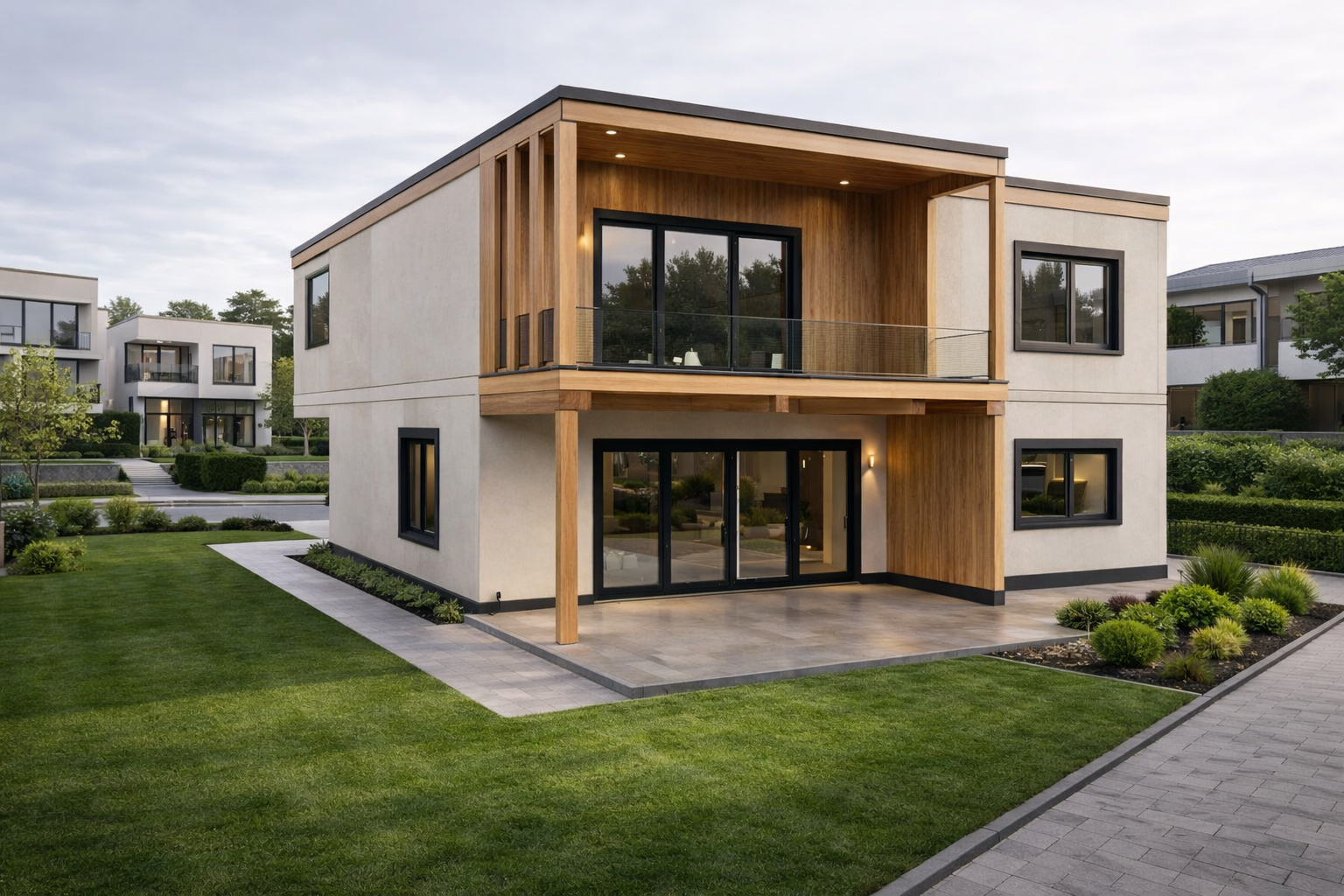
SIP technology • Portugal
Energy-efficient construction with precision SIP panels, designed for Portugal's Atlantic climate.
From first consultation to structural shell in four clear stages — design, manufacturing, and on-site assembly.
Planning call
Initial consultation, project scope, and budget direction.
2-3 weeks
Architectural project adapted to SIP build logic.
Up to 2 months
Factory production of SIP panels to final specification.
~1 month
On-site assembly of walls, floors, and roof.
SIP panels combine structure and insulation in a single factory-built element — enabling faster, cleaner, and more predictable construction.
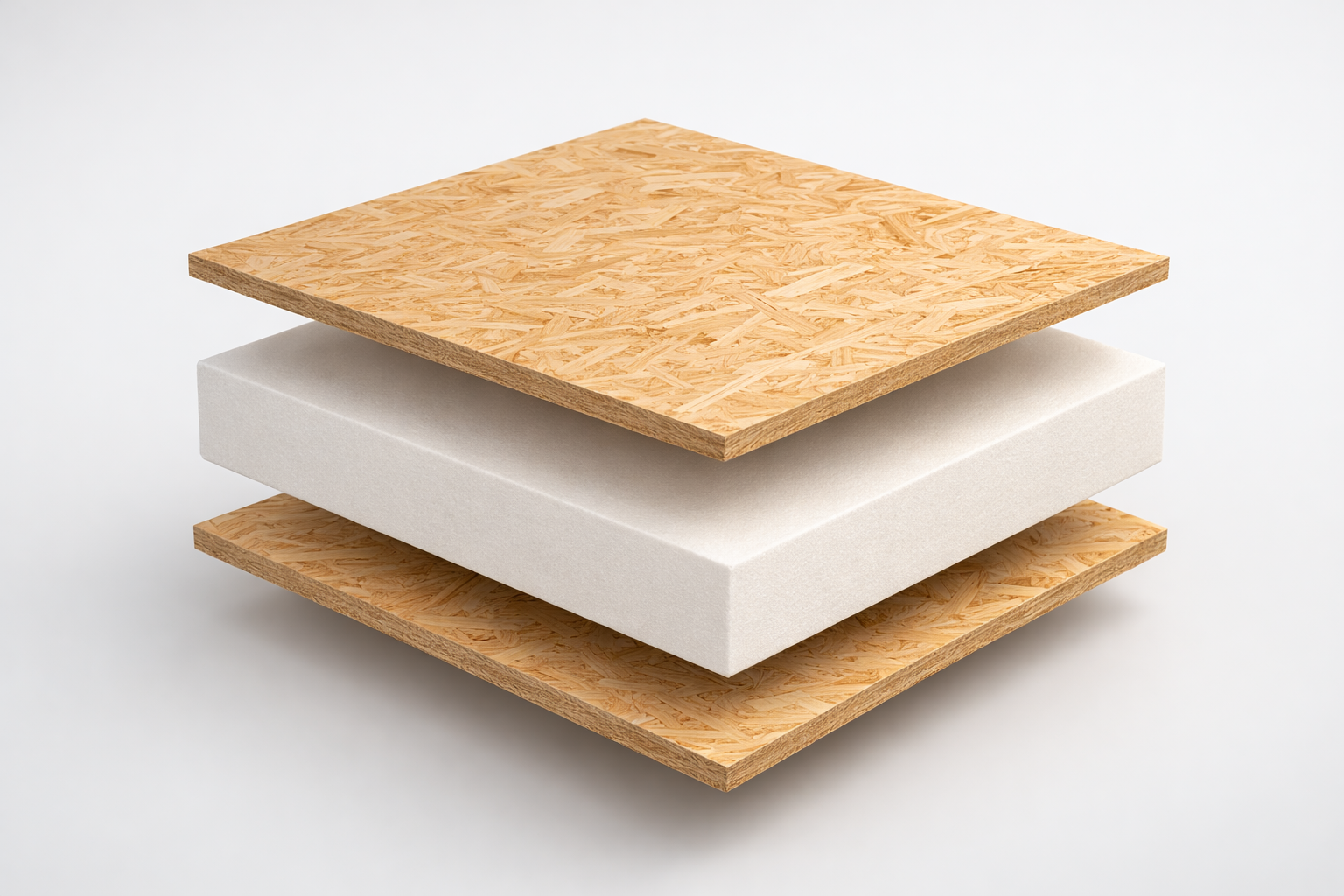
A SIP panel pairs a rigid insulation core with two structural facings to create one high-precision building element.
Hot-press production keeps panel geometry stable and dimensions consistent from drawing to assembly.
Continuous insulation through walls, floors, and roof reduces thermal losses and supports lower operating demand.
How SIP construction protects homes from Atlantic humidity, coastal wind exposure, and seasonal thermal fluctuations.
Along the coast, SIP panels provide continuous insulation that prevents moisture buildup even through stormy, humid, and windy conditions.
SIP panel assemblies are manufactured under controlled conditions, ensuring consistent insulation thickness and structural integrity that performs reliably across Portugal's seasonal temperature swings.
Continuous insulation reduces condensation risk on humid, stormy coasts
Factory-engineered for year-round comfort in both winter and summer
Atlantic humidity
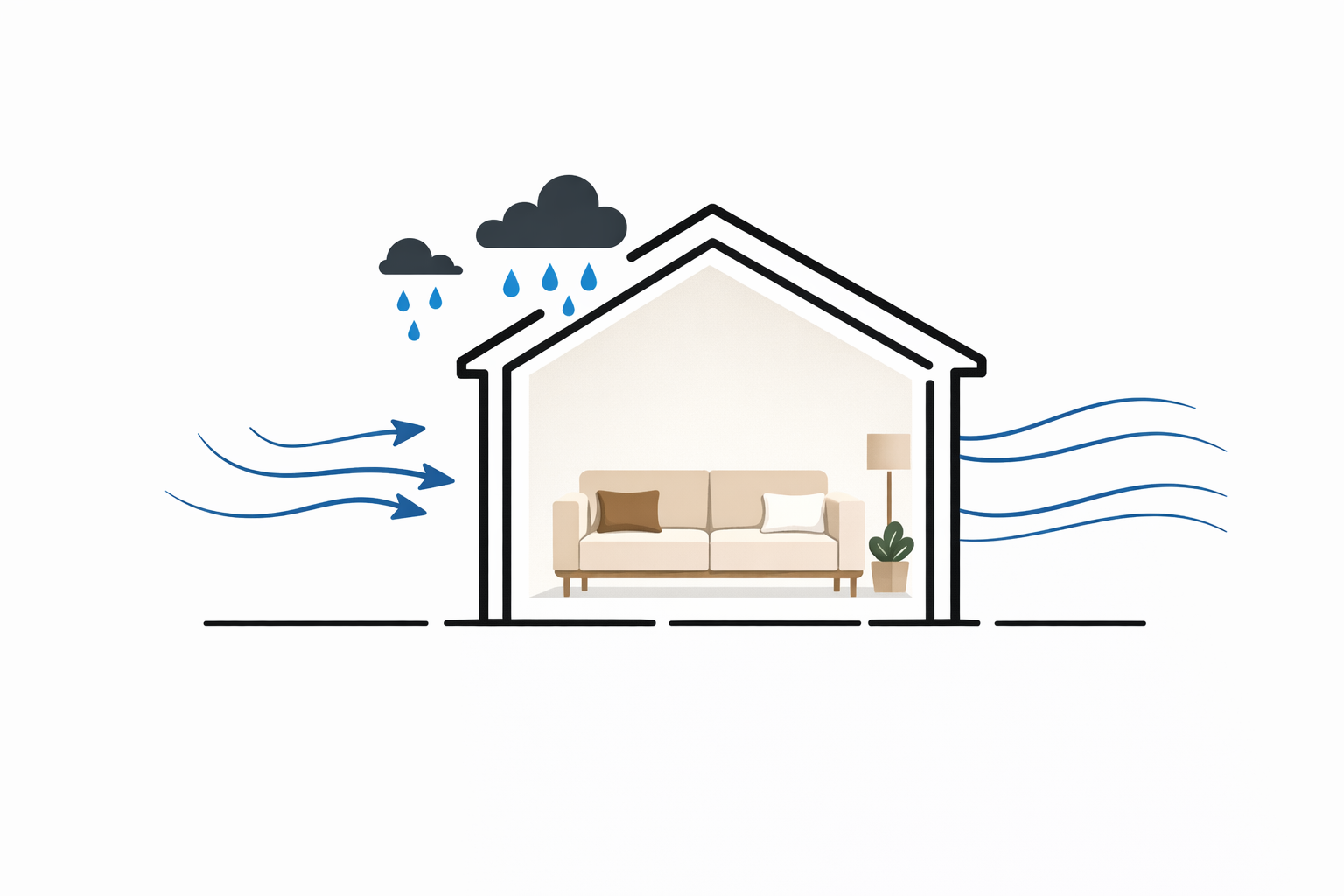

Continuous protection with reduced condensation risk.

Structural rigidity and wind resistance

Stable indoor temperatures all year

Significantly reduced thermal losses
Atlantic protection • humidity, wind, and thermal stability
SIP assemblies are specified with certified fire-resistant materials and project-appropriate build-ups aligned with local requirements.
Structural layers and insulation assemblies are selected from certified systems appropriate to the intended fire-performance class.
Wall, floor, and roof build-ups are coordinated with project documentation and local fire-safety requirements.
Technical fire-performance documentation can be shared on request with architects, engineers, and development teams.
Key benefits of SIP panel construction for comfort, build speed, and long-term efficiency.
Structural shell ready in about 3 months with a predictable factory-led schedule.
Continuous insulation for high comfort and lower heating and cooling demand.
Rigid panel structure suited to coastal wind exposure and stormy periods.
Factory-cut geometry keeps assembly accurate and results consistent.
End-to-end support — from initial consultation and project adaptation to structural shell assembly and exterior finishing.

Feasibility review and early project guidance.

Adaptation of new or existing projects for SIP build logic.

Preparation and execution of the foundation base.

Site assembly of walls, floors, and roof panels.

Supply and installation of openings.
Facade cladding and final exterior envelope works.
Scope may vary by project, region, or partnership model.
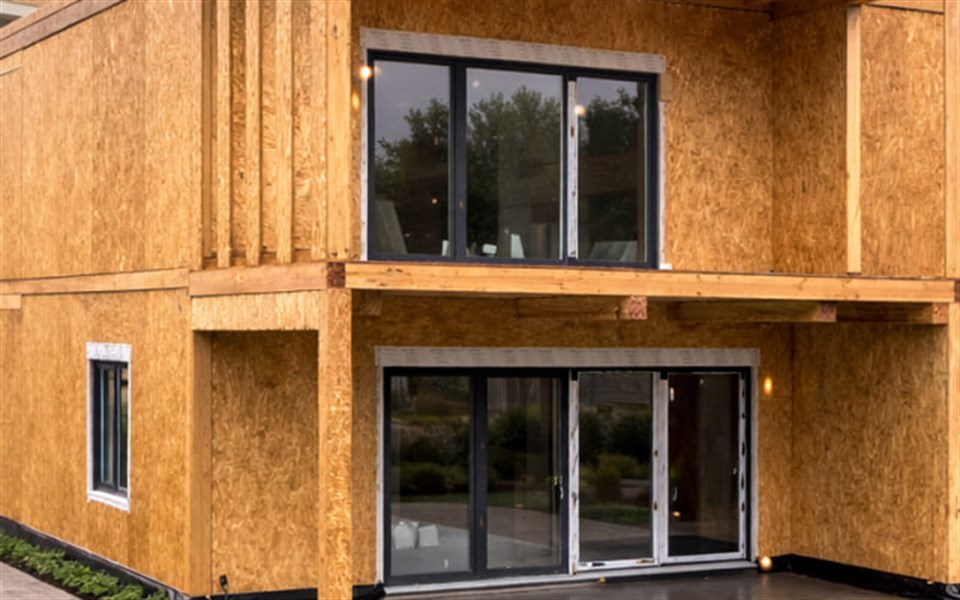
Real project photos and documentation from our build in Figueira da Foz.
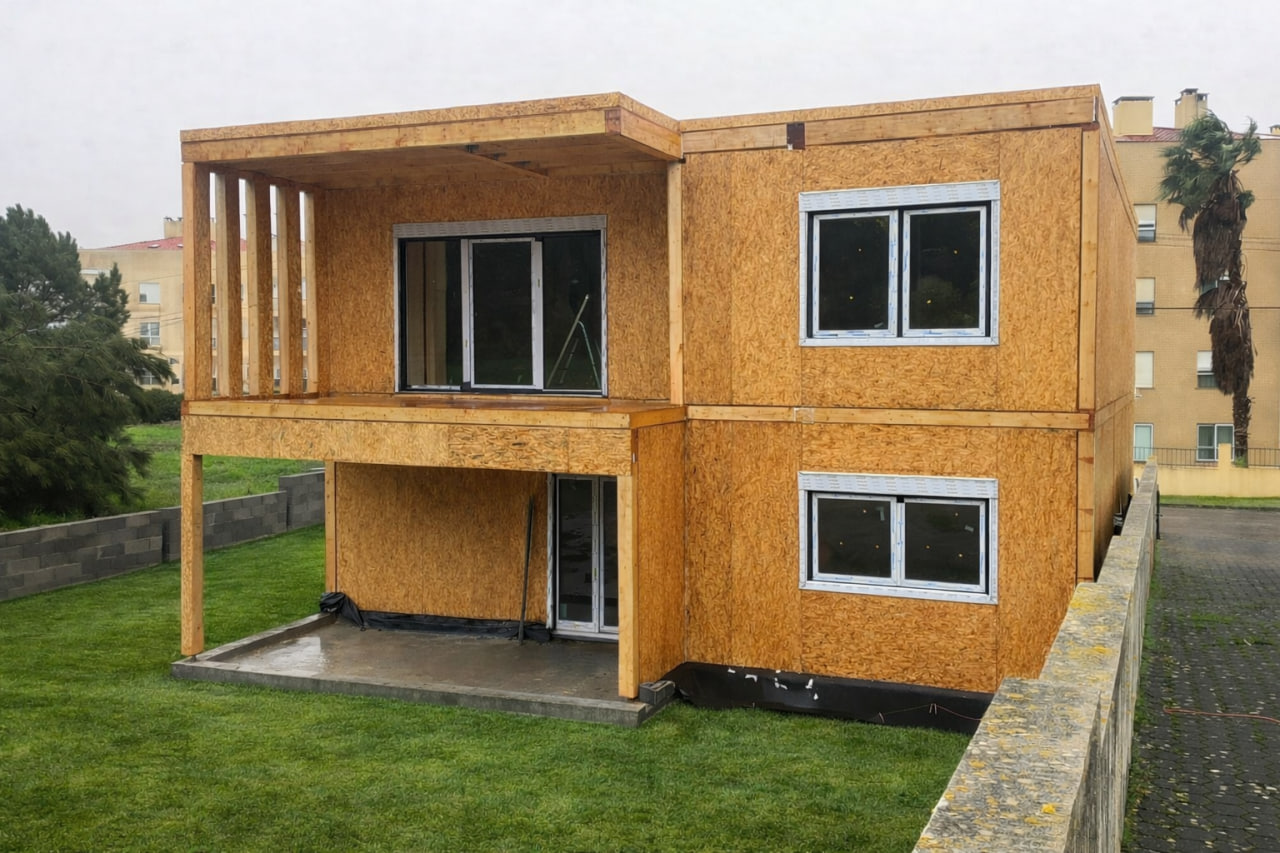 Exterior
  Interior
  Assembly Assembly sequence (from project documentation)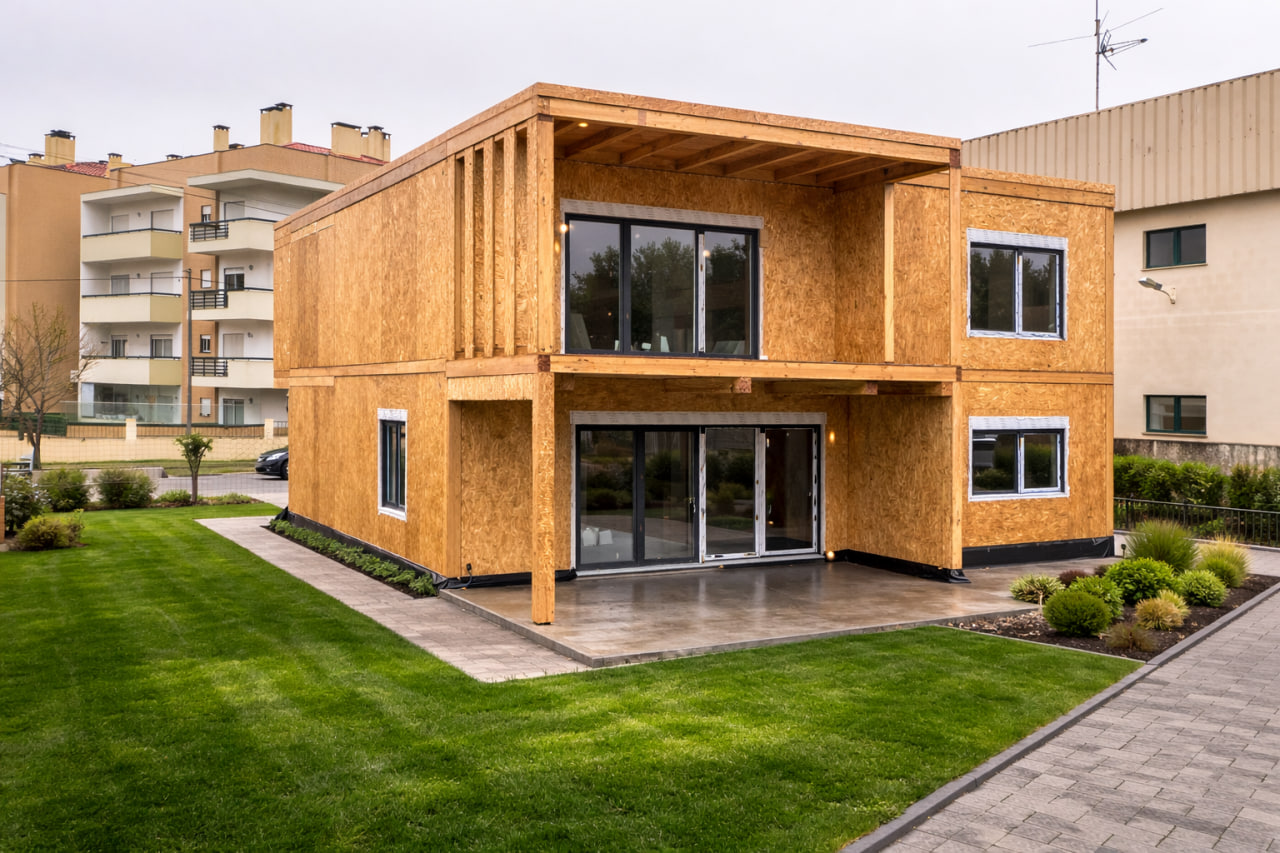
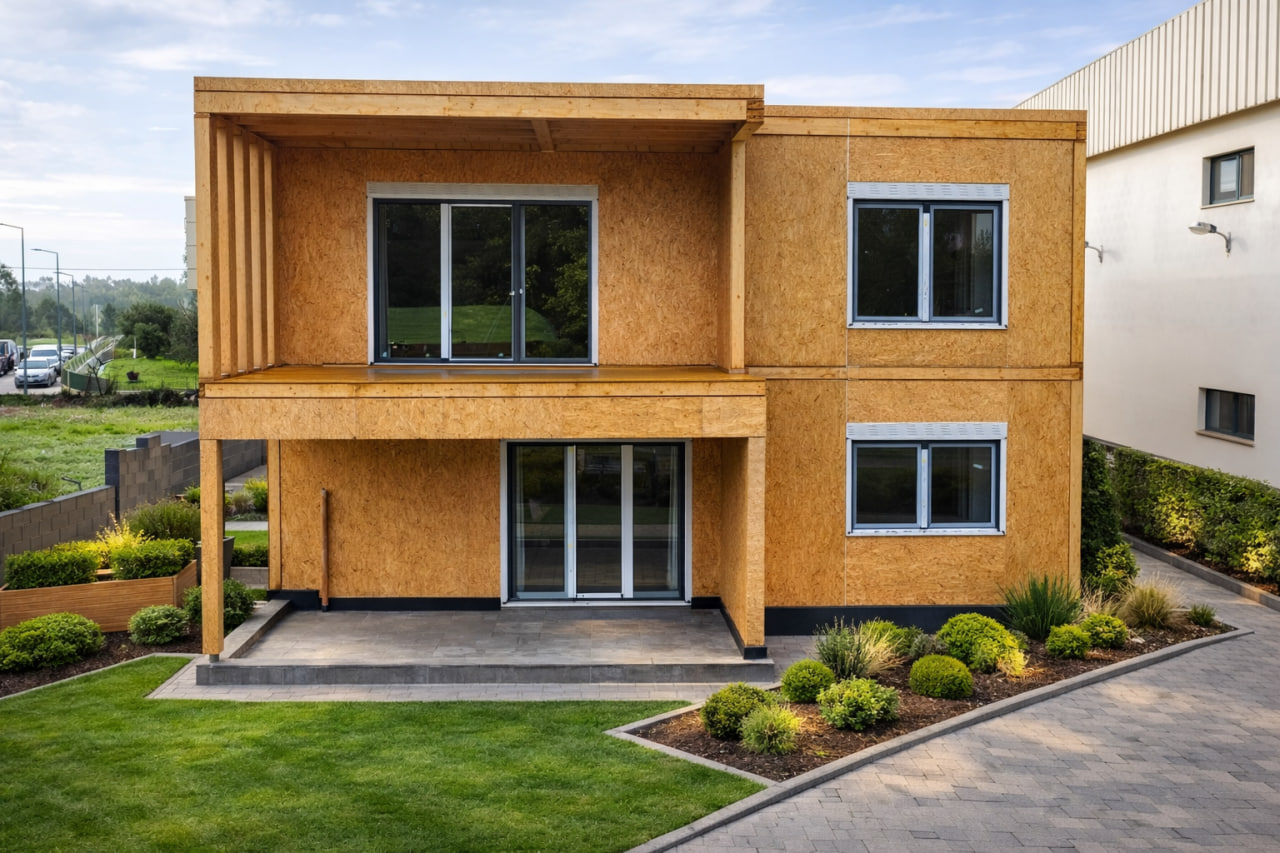
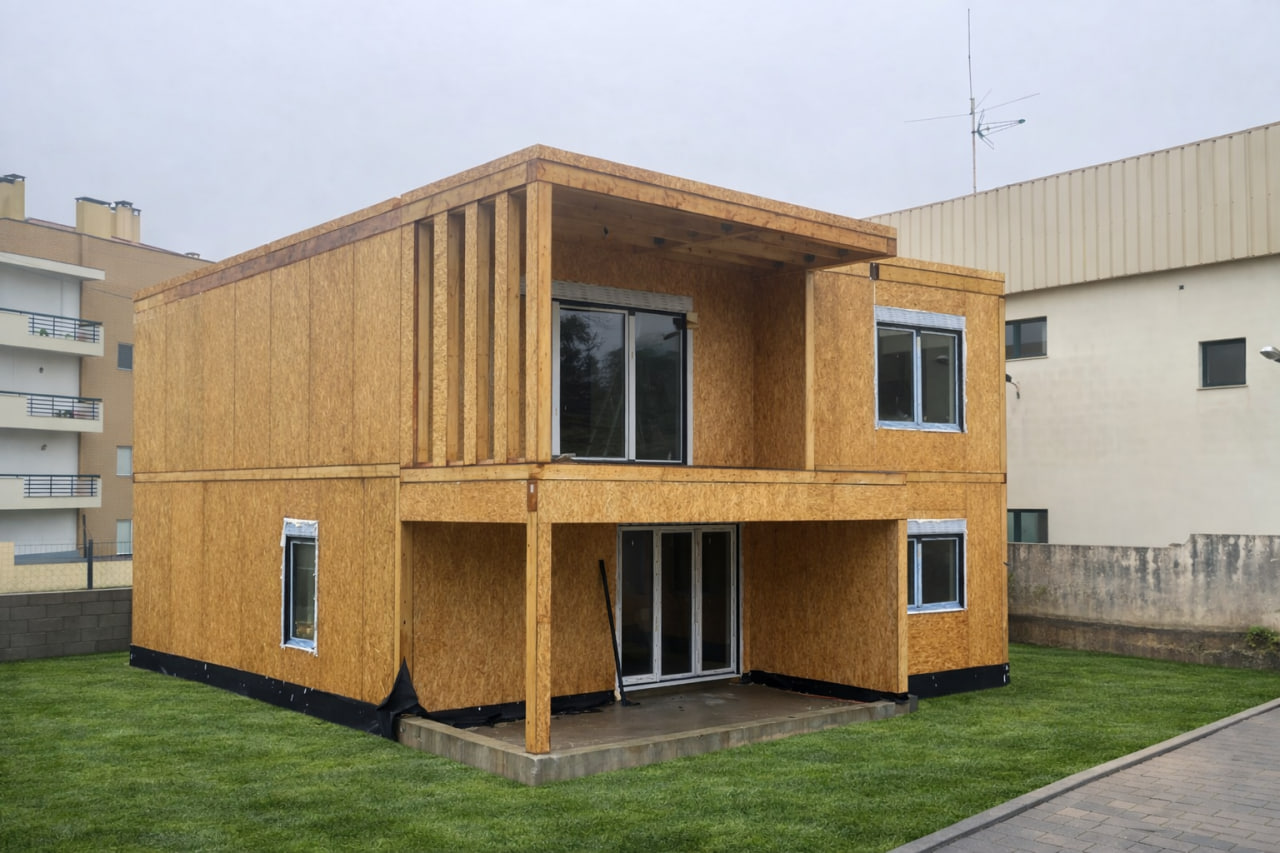
Figueira da Foz — real project documentation.

Experience the quality, comfort, and finish of a real built SIP home.
Collaboration framework for architects, developers, and construction teams working with SIP technology.
Common questions about SIP construction, timelines, and working with Den.
SIP (Structural Insulated Panels) are load-bearing building panels made from an insulating core bonded between two structural facings. Because they are factory-manufactured, they arrive with precise dimensions, consistent quality, and strong thermal performance. This allows faster assembly on site and a more continuous insulated envelope than many traditional wall systems.
Yes. When the project is designed with the right wall build-up, ventilation strategy, and detailing for the local climate, SIP homes perform very well in Portugal. Their continuous insulated envelope helps reduce condensation risk, limits uncontrolled air leakage, and improves thermal comfort through both humid winters and hot summer periods.
For a structural shell, SIP construction typically takes around 3 months from technical preparation to final on-site assembly. In practical terms, the process usually includes project adaptation to SIP logic, factory manufacturing of panels, delivery coordination, and then fast installation on site. Compared with many conventional methods, this reduces delays, improves precision, and shortens the critical construction phase.
Yes. SIP houses are known for high energy efficiency because the building envelope combines structure and insulation in one system. This helps reduce thermal bridges, lowers heating and cooling demand, and makes indoor temperatures more stable and comfortable throughout the year.
Yes. Existing architectural projects can usually be adapted to SIP construction without losing the main design intent. The adjustment process typically focuses on spans, junctions, panel module logic, and buildable detailing so that the house keeps its architectural character while becoming compatible with SIP manufacturing and assembly.
Yes. We can provide technical information on panel composition, performance values, assembly logic, and supporting documentation relevant to the project stage. For partners, architects, and serious enquiries, this can include the key specifications needed for design coordination, approvals, and feasibility review.
Yes. The sample house is located in Figueira-da-Foz and can be visited by appointment. During the visit you can see the build quality, spatial feel, finishes, and overall comfort of a real completed SIP home, which helps make the system much easier to evaluate than from drawings alone.
Yes. We work with architects, developers, construction companies, and investors who want to integrate SIP technology into residential projects in Portugal. Collaboration can include project adaptation, technical coordination, delivery planning, and support during the transition from concept to buildable SIP system.